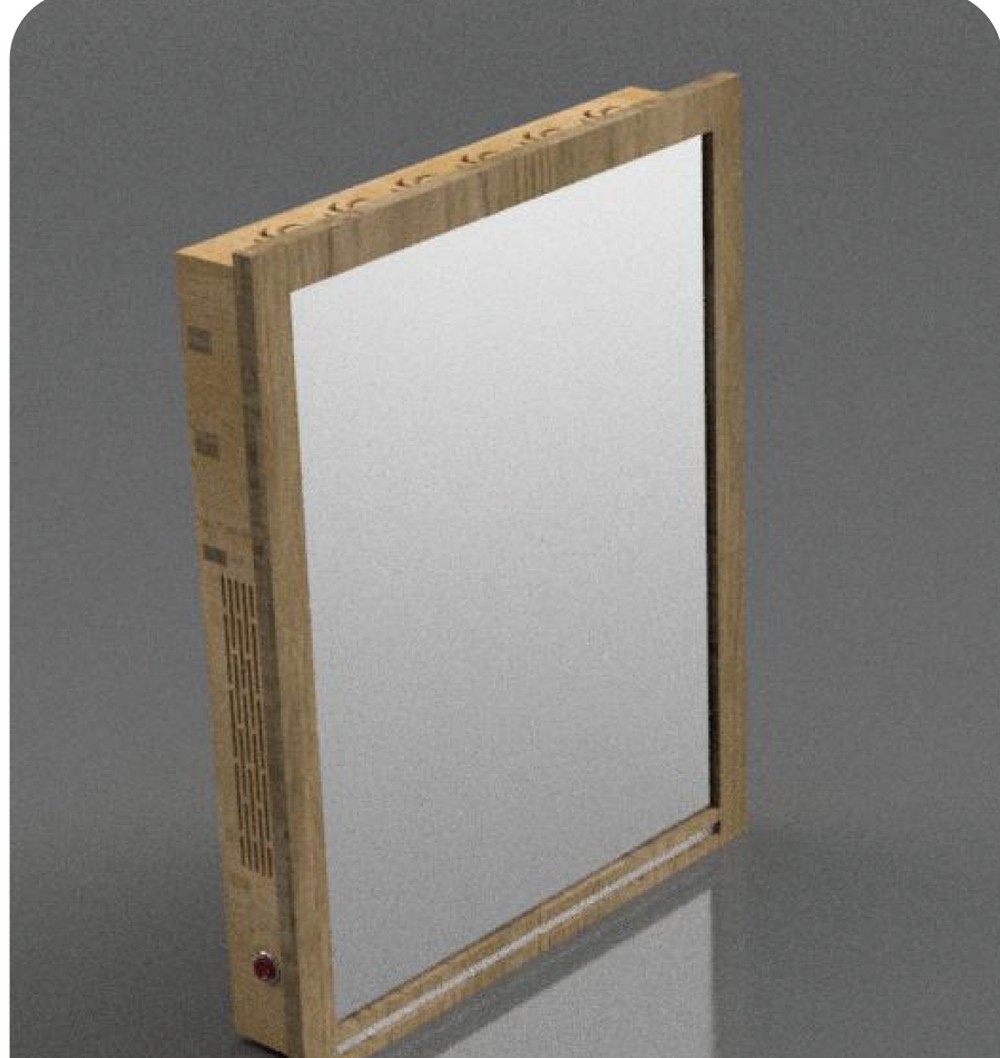
Ten years in the making — an air conditioner that delivers oxygen. Advanced, eco-friendly cooling, and Hanibaram's own patented technology
ONE TANK · THREE JOBS
AI DATA
AI DATA
CENTER
CENTER
COOLING
COOLING
No water
No extra grid capacity at peak
Suppresses battery fires too
Why does cooling still
use so much electricity
and water?
0 L
No water at all20,000 t a year → none
N₂
One tank cools and suppressesBattery fires included
0 kW
Extra grid capacity at peakEven in the hottest hours
~10%
Electricity used by coolingvs. average air-cooled (PUE 1.54)
HANIBARAM adds one liquid-nitrogen tank to a data centre being built. Outside air does the work most of the year, and liquid nitrogen makes up the shortfall only in the hottest hours. No water is used at all, nothing extra is drawn from the grid at the summer peak, and if a battery fire starts the same nitrogen cools and smothers it. It does not replace the cooling plant — it sits beside it.
It does not replace the cooling plant. It sits beside it.
However a data centre is built — air-cooled, or direct-to-chip liquid cooling — that plant is enough for most of the year. What is hard is the hottest few hours, the few minutes after a power cut, and the moment a fire starts. Today each of those is handled by separate equipment: a peak chiller or evaporative spray, standby cooling, and the gas suppression system required by law. HANIBARAM covers all three with a single liquid-nitrogen tank.
① Summer peak
Only when outside air falls short, and only by the amount it falls short, does liquid nitrogen make up the difference. No chiller and no water spray, so nothing extra has to be drawn from the grid on the hottest afternoon. Korean summers are humid, which blunts evaporative cooling — liquid nitrogen does not care about humidity.
② Power cut
With the power gone, liquid nitrogen still takes heat away as soon as a valve opens. It slows the rise in room temperature while the generator comes up and the cooling plant restarts.
③ Battery fire
Lithium-ion thermal runaway does not stop with a gas that only removes oxygen. It has to be cooled. Liquid nitrogen from the same tank is routed through a bypass valve into the battery room, cooling and smothering at once, and leaves no residue.
* Unpowered cooling during an outage applies to the air-cooled portion and the battery room. Direct-to-chip cooling needs its circulation pumps running, so pump power stays on the UPS as it does today. Liquid-phase nitrogen discharge will be applied after fire-safety certification.
FIRE · BATTERY · PEAK
What stops a data centre is fire
An AI data centre is now a battery data centre.
Every recent major data-centre fire started in the lithium-ion batteries of the UPS or other power equipment. A lithium-ion fire spreads by generating its own heat and gas inside the cell, so a gas that only shuts out oxygen will not stop it. It has to be cooled. Cool it with water, and the servers are ruined. Since 2025 lithium-ion UPS systems cost the same as lead-acid, so almost every new data centre uses them, and next-generation AI racks carry far more energy storage per rack.
Incident
Origin
Outcome
Pangyo, SK C&C · Oct 2022
UPS lithium-ion batteries
Kakao services down for up to 127 hours · 1,500 kg of suppression gas released, fire not put out
Singapore, Digital Realty · Sep 2024
Lithium-ion batteries in the battery room
Alibaba Cloud outage · recovery delayed while water-soaked equipment dried
Daejeon, National Information Resources Service · Sep 2025
UPS battery racks
709 government IT systems taken offline
Strasbourg, OVHcloud · Mar 2021
Power conversion equipment
No automatic suppression · building destroyed
1,500 kgGas alone did not put it out Suppression gas released at Pangyo — battery thermal runaway continues without oxygen
−196°CCools and smothers at once Liquid nitrogen absorbs heat as it boils, then displaces oxygen as a gas · leaves no residue
6.66 kgTo stop one cell in thermal runaway Measured on a 65 Ah lithium iron phosphate cell (Fire Technology, 2024)
ONE TANK, TWO PATHS
Everyday coolingLiquid nitrogenFire response
Works alongside direct-to-chip (D2C) servers
The latest AI servers move chip heat into water through cold plates and cool that water with outside air, which is enough for most of the year. HANIBARAM trims the coolant with liquid nitrogen only in the hottest hours, and only by the amount it runs over target. No chiller, no evaporative cooling, and no extra power drawn on a summer afternoon.
※ Incidents are from press and audit reports; battery suppression figures are from published research (J. Power Sources 2021 · Fire Technology 2024 · Fire 2024 · Batteries 2026). HANIBARAM will measure and publish its own suppression performance during field trials, and liquid-nitrogen discharge will be applied after fire-safety certification.
SITE · POWER · WATER
Before cost, it decides whether you can build at all
What stops a data centre is not the land. It is power and water.
In the first half of 2025, exactly one data centre was permitted in the Seoul metropolitan area. The reason was a limit on electricity supply, and new capacity fell to 36 MW, a third of the previous half-year. What decides a site is not the ground but substation access, headroom on the grid, and water. Cooling that draws less power and uses no water at all is therefore not a saving — it is whether the project happens.
0tCooling water per year 20,000 t before → not a single drop
+3 racksMore GPU racks on the same site 10 → 13 racks on the same grid capacity
SAME SITE, SAME GRID — GPU racks that fit on one site
With exactly the same grid capacity, less power spent on cooling means more GPUs fit. Cooling drops from 547 kW to 54.7 kW, and all 492 kW freed up becomes server space.
GRID CAPACITY — where 2,079 kW of grid supply goes
Annual cooling running costcooling 1.35 MW of IT for a year
829M KRW
no published figure
359M KRW (power 83 + agent 276)
Equipment the cooling needs
tower · chiller · water treatment · pumps · piping + separate gas suppression
dry cooler · CDU · pumps · spray · water treatment + separate gas suppression
dry cooler · CDU · pumps + liquid-nitrogen tank — suppression included
* Basis — 135 kW per GB300 NVL72 rack · server inlet 27°C (upper end of the ASHRAE recommended range) · power 173 KRW/kWh · liquid nitrogen 300 KRW/L · conventional PUE 1.54 (Uptime Institute 2025 global average). All figures are calculated from design targets, not measured in a demonstration. The rack row assumes the same 2,079 kW of grid capacity; the running-cost row assumes the same 1.35 MW of IT load. Build cost varies so much with site and configuration that we do not quote a single percentage for it.
On the middle column — the latest chiller-less designs, using 45°C water and dry coolers, report cooling at roughly 6–10% of the IT load. Measured on electricity alone, our margin over that design is small. What separates HANIBARAM is using no water at all, adding no grid capacity at the summer peak, cooling that continues without power, and the same tank putting out a battery fire.
WHAT CHANGES
What changes
Half the plant disappears — and so does the electricity it was drawing.
No cooling tower
No evaporative rooftop tower, none of its noise, and no water treatment for it.
No chiller
The large compressor that ran around the clock is gone entirely.
No water consumed
Nothing is evaporated to cool, so there is no make-up water, no treatment and no discharge. The water that is filled once simply circulates in a sealed loop.
Five stages become three
Cooling tower, chiller, pumps and coolant piping all drop out.
What remains is a dry cooler that rejects heat to outside air, and a liquid-nitrogen tank used only in the hottest hours.
That same tank also serves as the gas suppression system the law requires, so one whole system drops out.
Where direct-to-chip servers are used, the cold plates, the CDU and the circulation pumps remain.
How much of the build cost this saves depends heavily on the site and the configuration. Rather than quote a single
percentage, we will measure it at the demonstration stage and publish what we find.
* The diagram below, and the schematics that follow, describe the HANIBARAM gas loop. For most of the year outside air and the dry cooler reject the heat; liquid nitrogen is used in the hottest hours and in a fire.
Around 10% of today's electricity
Once the tower and the chiller are gone, so is the power they drew 24 hours a day.
Conventional water cooling100
Hanibaram gas looparound 10
~10%Electricity vs. today's systems Cooling power · design target
30% ↓Operating cost saved (max.) Power, maintenance and water combined
WHO WE ARE
More than ten years, on one road: eco-friendly cooling
HANIBARAM completed the development of an air conditioner that uses liquid oxygen and delivers oxygen as it cools. For more than ten years the company has worked on nothing but cooling.
It is the first down a road no one has taken, carrying the core technology proven in that air conditioner straight into AI data centre cooling with the best cost-to-performance available.
Eco-friendly refrigerantCryogenic vaporization heat10+ years in-house
AI data centres are growing explosively — and every existing cooling method has hit its limit
High-density GPU heat climbs steeply every year, and each of the five methods in use today carries a structural limit of its own.
01
The limit of air cooling
Physical heat control at the chip cannot keep pace with how fast high-end GPUs advance.
02
The fear in water cooling
A single small coolant leak carries the fatal risk of taking the whole floor down.
03
The weight of immersion
Heavy dielectric fluid makes the system enormously heavy and real maintenance extremely hard.
04
The blind spot in D2C
It cannot cool anything but the main chip, and the leak risk stays.
05
No answer to fire
In a data centre fire, conventional class C and D extinguishers risk destroying the hardware itself.
Data centre cooling methods compared — air, water and D2C, immersion, and the Hanibaram non-flammable gas loop
Cooling method
Air
Water · D2C
Immersion
Gas loop · Hanibaram
Liquid inside the hall
None
Coolant right beside the server
Servers submerged in dielectric fluid
None — non-flammable gas only
If it leaks
Not applicable
The whole floor can go down
Fluid spill and floor contamination
No leak in the gas loop
High-density GPU heat
Cannot keep up with the chip
Handles it
Handles it
Handles it
Cooling the rest of the board
Yes (room airflow)
D2C reaches the main chip only
Yes (fully submerged)
Yes — whole-room injection on demand
Maintenance
Straightforward
Constant piping and water quality work
Fluid weight makes access hard
Mostly refrigerant top-up
If a fire starts
Separate suppression · risk to hardware
Separate suppression · risk to hardware
Separate suppression · risk to hardware
The cooling loop is the suppression system
Figures for air, water and immersion cooling summarise the commonly published characteristics of each method. The Hanibaram non-flammable gas-loop system was filed for patent in July 2026 and is under development; the figures shown are design targets.
THE SOLUTION
Next-Generation Non-Flammable Gas-Loop Cooling
No water is consumed. Gas takes the heat out — and the same gas puts the fire out.
Outside air rejects the heat for most of the year; liquid nitrogen only tops it up in the hottest hours — and in a fire the same tank goes straight there
Outside air · dry cooler → thermal store → circulation header → distributor → cooling controllers → hall pipingLiquid nitrogen only in the hottest hours, and only for the shortfall — not at all for most of the yearPiping wraps the racks — non-flammable gas flows through it, never waterBypass valves open and close sections, concentrating cooling where it is needed and sending refrigerant straight to a fireIf oxygen falls below 19%, the alarm, shut-off and ventilation sequence runs in order, and escape routes stay open
Zero water consumed
Nothing is evaporated to cool. No make-up water, no treatment, no discharge. Only non-flammable refrigerant circulates in the HANIBARAM loop, so no leak in that loop can stop a server.
Emergency Fire Suppression
When a fire starts the alarm sounds first and people are evacuated; the bypass valve for that section then opens and sprays non-flammable refrigerant at it. The cooling loop becomes the suppression system.
Room Flood Cooling
Before chipset heat reaches the ceiling of the loop, direct injection pulls the temperature of the whole room down.
Cooling medium and behaviour in each operating mode
Operating mode
Medium used
What it does
Normal cooling
Circulating fluid through the cooling units
Cooling units around the racks send chilled air into the hall and bring the rack temperature down.
Flood cooling
The same non-flammable gas
A bypass valve opens and the −196℃ refrigerant is injected, pulling the temperature down rapidly.
Fire response
The same non-flammable gas
On a fire the alarm sounds and people are evacuated; only then is non-flammable refrigerant discharged to put the fire out.
Data centre cooling uses liquid nitrogen (−196℃); the oxygen air conditioner uses liquid oxygen (−183℃).
They are two branches of the same vaporization-heat control technology, not the same system.
Fire suppression is part of the design; its actual performance will be verified by accredited testing at the demonstration stage.
Fail-Safe control — it lets people out, it never shuts them in
If oxygen in the hall falls below 19%, or gas concentration moves outside
the safe band, the system runs the five steps below in order. The doors lock against entry from outside, while
the escape route from inside always stays open.
01
Alarm
The control screen and the on-site sounder go off at once.
02
Shut off the agent
The valve for that section closes and injection stops.
03
Forced ventilation
Supply and exhaust run at full rate to bring the level back.
04
Entry restricted
The doors lock so nobody can walk in from outside.
05
Escape route opened
Doors leading out never lock. Evacuation comes first.
Occupied spaces and unmanned halls are held to separate thresholds.
The actual set points and the alarm and shut-off logic will be fixed at the demonstration stage,
in line with fire and safety codes.
PROOF & DEPLOYMENT
How far we have come, and how you deploy it
We are not putting this into a whole data centre at once. We measure it on a single rack, publish the numbers, and then move to the next step.
NOW
Patent filed · prototype design
Cooling device using liquid nitrogen was filed in July 2026. The prototype is being designed now.
STAGE 1
One-rack demonstration
Heat load, inlet and outlet temperature, power draw and gas consumption, measured and published as they are.
STAGE 2
Small server room
Section cooling and safety control run together. Fire response is tested at this stage.
STAGE 3
Data centre partnership
Scale grows on the strength of measured data.
The cooling performance and savings quoted on this site are design targets.
As soon as measured values come out of the demonstration, they will replace them here.
Deployment comes in three parts
We do not sell the hardware and walk away
Building the infrastructure
The piping that wraps the racks, the distributor and the cooling controllers are designed for the site and installed. With no cooling tower and no chiller, the scope of the build shrinks.
Supplying the agent
We take on the regular liquid nitrogen top-up. You pay for what you use, so the up-front cost spreads into running cost.
Monitoring and maintenance
Rack temperature, oxygen and gas concentration, supply pressure and remaining volume, and power draw, all on one screen. Anything outside the band raises an alert, and scheduled servicing is included.
Everything on one screen
An operating system, not a box of hardware
Oxygen concentration, the pressure and remaining volume of the non-flammable agent, rack inlet and outlet temperature with GPU load, and the power actually drawn — all on one screen. Anything outside the band is flagged on the screen first, and alarm, shut-off and forced ventilation follow in that order.
OPERATIONS DASHBOARD — example screen (design targets)
Normal — inside the bandCaution — the operator is notifiedDanger — alarm, shut-off and ventilation run automaticallyLive reading
The screen layout may change to suit the site during the demonstration stage. The figures shown are examples based on design targets; measured values will replace them here.
Pricing and contract terms depend on the scale of the demonstration. If you are considering a deployment,
tell us the conditions through Technical Inquiry.
DATA CENTER · CORE TECHNOLOGY
Cooling? A new paradigm, completed
With no compressor, we control the vaporization heat of liquid nitrogen alone to cool the server hall fast. There is no cooling tower and no chiller drawing enormous power, so the system runs on the fans and controls alone. The agent is non-flammable, so the very same refrigerant handles fire suppression.
SYSTEM DIAGRAM — NON-FLAMMABLE GAS LOOP
−196°C
Liquid nitrogen vaporization heat
Cooling without a compressor. Vaporization heat alone drives a very fast temperature drop.
N₂ suppression
Doubles as fire suppression
The same nitrogen is injected straight at the fire. The cooling loop is the suppression system.
GWP 0
Non-toxic, non-flammable agent
No ozone damage and no persistent toxic residue. Nitrogen already makes up 78% of the air.
ROADMAP
One core technology, four markets
In production
Air Sterilizer
Purification and sterilisation in one unit. It hangs on the wall like a picture frame and takes no floor space.
Air purificationAir sterilization
On sale via Naver Shopping and Coupang
Development complete
Oxygen-delivering eco-friendly air conditioner
The world's first air conditioner with liquid oxygen as refrigerant. It cools with no outdoor unit and delivers 99.8% high-purity oxygen at the same time.
Oxygen-delivering eco-friendly air sterilizer
The oxygen air conditioner with the cooling taken out. Oxygen, sterilisation, purification and phytoncide all remain.
In development
AI DATA CENTER COOLING
No cooling tower, no chiller. A technology that lets a data centre spend its power on data alone — and changes the cooling industry with it.
Autonomous Air Robot
The air goes to the people. The only mobile climate platform that carries oxygen, cooling and sterilisation and drives itself.
Proof of concept
EV Climate Control
Run the A/C without losing range. By keeping cooling off the battery we target a 25–30% improvement in range.
NOW IN DEVELOPMENT
The air goes to the people
We put the oxygen air conditioner on an autonomous robot. It drives itself to where people are and delivers clean air — the world's first mobile climate platform.
IN SERVICE
It drives itself to where people are and delivers clean air
HANIBARAM AUTO ROBOT
Solid hinoki case · six-wheel drive · display on top
DRIVING
Driving and delivering air for real
99.8% oxygen supply
Sterilisation · purification
Eco-friendly cooling
Advertising display
The only DC 24V air conditioning system
OXYGEN AIR CONDITIONER
Ten years of obsession made an air conditioner that delivers oxygen
It draws in hot, dirty indoor air, strips out dust and viruses, chills it, then sends it back mixed with 99.8% high-purity oxygen and hinoki phytoncide.
AIR FLOW — FROM POLLUTED AIR TO FOREST AIR
This is not just an air conditioner
The world's first liquid-oxygen-refrigerant air conditioner, in a solid hinoki case. It delivers high-purity oxygen and phytoncide while it cools.
99.8%
High-purity oxygen
5,000 KRW
Electricity for 30 days at 10 hours a day
96% ↓on the electricity bill — against 140,000 KRW a month for a 105㎡ living-room unit (no outdoor unit, no compressor)* This compares the electricity bill only. Liquid oxygen is the refrigerant, so it is replaced about every two weeks, and the sustained cooling output differs from a conventional air conditioner. One prototype has been built and tested in-house; there is no production or sales record yet.
99.8% high-purity oxygen
Fresh oxygen comes out while it cools
Ultrafine dust removed
H-13 HEPA filter
Viruses removed
Removes bacteria and viruses together
Natural phytoncide
It comes from the solid hinoki case
DC 24VThe only air conditioner wired straight to solar
No step-up to high voltage is needed — it connects directly to the panels and cools below zero.
Fully RE100-ready
TYPE 1Cooling only
TYPE 2Cooling and heating
Air conditioner refrigerants compared — R-134a, R-1234yf and Hanibaram liquid oxygen
Refrigerant
R-134a
R-1234yf
Liquid oxygen · Hanibaram
Global warming impact
Severe (GWP 1,430)
Low (GWP < 4)
None at all (GWP 0)
Harm to people and soil
Destroys the ozone layer
Leaves TFA, a persistent toxin
Non-toxic · supplies fresh oxygen
Refrigerant cost per refill
approx. 20,000 KRW
approx. 300,000 KRW
approx. 100,000 KRW
HOW YOU GET ONE
Not bought outright — taken on subscription
2.5M KRW
Deposit
Paid once, when the contract starts.
200K KRW
Monthly subscription
KRW 200,000 a month, and all of this comes with it.
High-purity oxygenEco-friendly refrigerantViruses removedUltrafine dust removedNatural phytoncideMove it anywhere
5 years
Deposit returned in full
At the end of the five-year term the KRW 2.5 million deposit is returned as it was.
Terms may vary with the site and the number of units. For details,
Technical Inquiry and we will walk you through it.
PRODUCTS
Products
In productionWALL TYPE
Wall-Mounted Air Sterilizer
Hangs on the wall like a picture frame. Sterilises and purifies in one unit — 98.9% airborne bacteria reduction (KTL accredited test).
Upload a photo and a description in the admin page and it appears here automatically
OUR OWN PATH
Proven technology, our own road
There was nothing to compare us with, because no one had taken this road. So we have shown the product and had it examined at exhibitions in Korea and abroad.
Yeongnam Ilbo
2 March 2019 · Son Seon-woo
“Electricity bills 99% lower than a conventional air conditioner — at half the price”
Measured by the reporter — 1,130 KRW for a month at 10 hours a day · 32℃ to 18℃ in 12 minutes · oxygen 20.9% → 22.9% over the same period
CRÓNICA Business
SPAIN · 1 JULY 2021 · MWC BARCELONA
“Hanibaram — Ventilador de incógnito”
Introduced as a product that installs discreetly into a frame, a TV or a mirror and combines ventilation, purification and sterilisation
Exhibitions · IR
MWC 2021 BarcelonaOurCrowd, IsraelShenzhen investor showcase, ChinaCool Industry Expo 2019Korea Invention Fair 2018Dong-A Health Industry Expo, COEX Seoul